
Dear Family, Friends, and Colleagues, We hope you are all enjoying February and staying warm and active. As we move through the final stretch of winter, we have some exciting content to share with you, including recent activities, upcoming events, and tips to stay healthy!
Celebrating 20 Years of Surgical Education Excellence
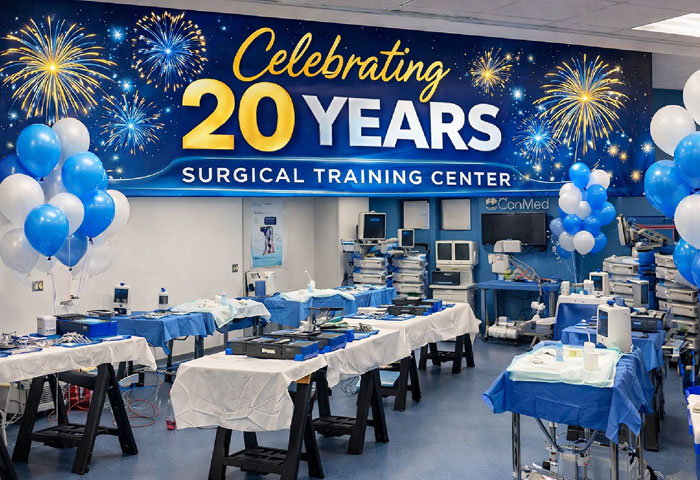
For two decades, the Orthopaedic Foundation BioSkills Lab has partnered with medical device companies and surgeons to deliver high-quality cadaveric training, research, and product development labs in New York City.
Organizations choose our lab for its expertise, flexibility, high-end customer service, and full-service capabilities including:
🔹 A private, standalone, non-profit cadaver lab dedicated exclusively to professional education and R&D 🔹 Lab availability seven days a week
🔹 Prime East Midtown Manhattan location that is within walking distance to Grand Central Station, and about an hour from JFK, Newark, and LaGuardia airports.
🔹 Corporate Hotel discount with the Shelburne Sonesta (5-minute walk from our Lab) and walking distance to the top rated restaurants in NYC.
🔹 Competitive pricing with customized lab configurations
🔹 Specialized support for orthopaedics, spine, neurology, plastic surgery, pain management, OBGYN, podiatry, and cardiology labs
🔹 Proven excellence hosting labs for R&D, surgeon and fellow education, regulatory preparation, product validation, and human factors testing
🔹 State-of-the-art arthroscopy towers, on-site instrument sterilization, quality specimens tailored to your needs, and an integrated AV conference space ideal for presentations and hosted meals
🔹 A trusted destination for clients across the U.S., Canada, Europe, the Middle East, and Latin America
Planning upcoming labs? We welcome the opportunity to support your next program.
👉 Reserve your spot now: https://ofals.org/bioskills-lab/
Manhattan Medical Immersion Programs
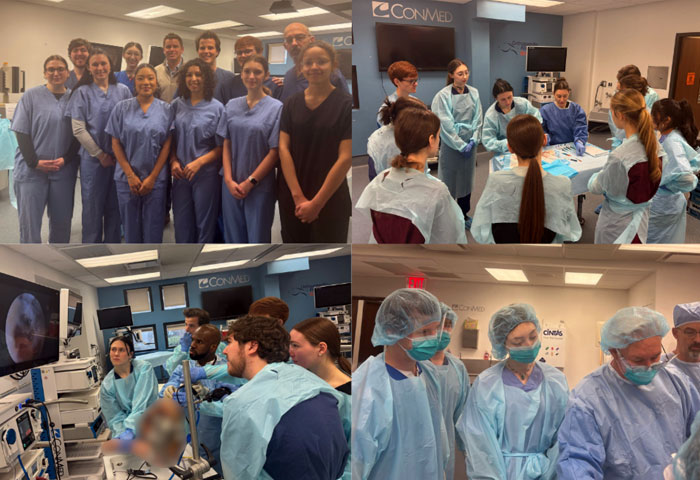
We are proud to share that the Orthopaedic Foundation hosted our Winter 2026 Manhattan Medical Immersion College Cohort this past January! The program proved to be highly successful, fostering hands-on experience, practical skill building, and dynamic engagement. We are grateful to all of the faculty and students who took part in making this program memorable.
Accepting Applications for Our Summer 2026 Medical Immersion Programs
Our Summer 2026 Manhattan Medical Immersion High School Program is set to take place from Sunday, July 5 – Saturday, July 11, 2026, and our Summer 2026 Manhattan Medical Immersion College Cohort from Thursday, August 6 – Monday, August 10, 2026. Applications will be reviewed on a rolling basis. We are excited to welcome new students!
Designed and led by the Orthopaedic Foundation, our intensive programs offer students an unmatched opportunity to explore the medical field through hands-on daily cadaver experience. Under the guidance of board-certified physicians and healthcare providers, students work with cadavers, learn surgical techniques, and perform procedures using the same equipment found in operating rooms and clinics. They are also introduced to areas such as biomedical engineering and medical device development, expanding their exposure to the broader healthcare landscape. Following the program, many students have access to shadowing opportunities in the New York area.
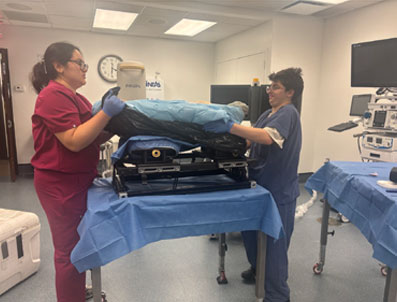
Our lab technician, Adina Shamieva (pictured on the left), works with a former Manhattan Medical Immersion Program student, Mia Luciani, in a spine lab as part of a shadowing experience.
These programs reflect our mission to provide meaningful, practical learning opportunities and to inspire students who are serious about pursuing careers in medicine and related fields.
Helpful Resources:
1. Camp Website
2. Apply Here
3. Have a Question? Contact Us
Research Corner
Research Spotlight: Phased Recovery After ACL Reconstruction
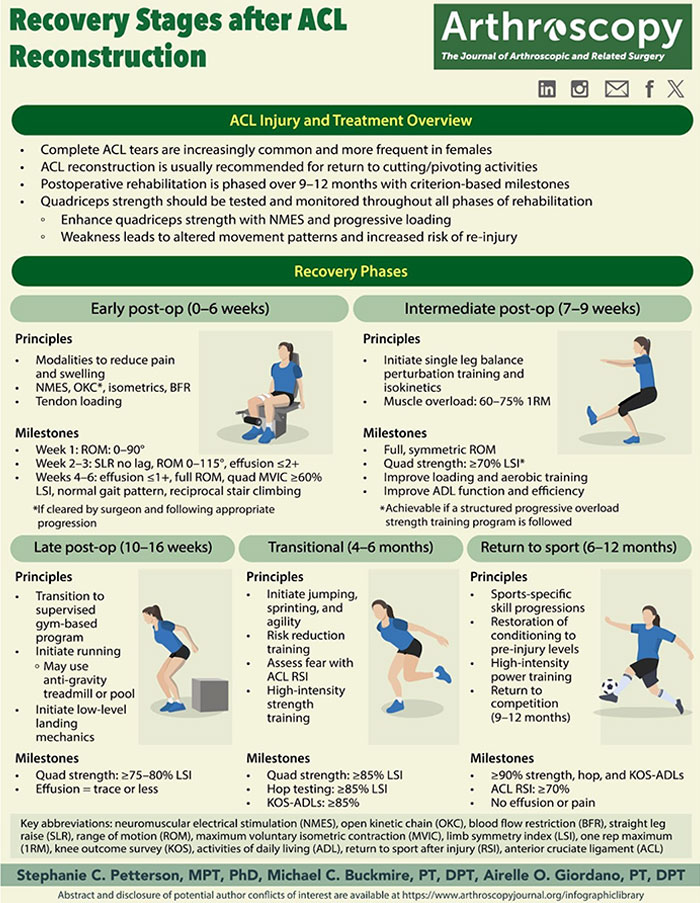
Successful recovery after anterior cruciate ligament (ACL) reconstruction requires not just surgical precision but a structured, criterion-based rehabilitation strategy. This concise infographic published in collaboration with the University of Delaware Department of Physical Therapy outlines a phased recovery model spanning early healing through return to sport, providing clinicians and patients with objective milestones tied to safe and effective progression. This staged and criteria-driven framework supports individualized rehabilitation after ACL reconstruction, aligning physical milestones with functional goals to optimize return-to-sport outcomes while minimizing reinjury risk.
Petterson SC, Buckmire MC, Giordano AO. Recovery Stages After Anterior Cruciate Ligament Reconstruction. Arthroscopy. 2025 Nov;41(11):4393–4395. PMID: 41314701.

Designing Health that Endures

From Information to Consistent Action
Why Good Information Isn’t Enough — and What Actually Works
In today’s world — no one is short on information. Most people are stretched thin — short on time and energy. Work is demanding. Life is full. Health gets the leftovers. And when it doesn’t fit real schedules, it doesn’t last.
Good information helps. But knowing what to do doesn’t mean you’ll actually do it.
The real challenge isn’t knowing what helps. It’s doing it consistently when schedules are full and conditions aren’t ideal. That’s where a system matters.
A System That Holds Up in Real Life
For a long time, I thought getting healthier meant pushing harder. It doesn’t. It usually comes down to three things: strategy, setup, and mindset.
It took me longer than I’d like to admit to figure that out.
Strategy sets the direction so your effort actually moves you forward. Setup makes the better choice easier -even when you’re tired and busy. Mindset is what keeps you from blowing it all up when things aren’t perfect — because they won’t be.
Nutrition matters. I start there because it has real impact right away. But it’s not the whole picture.
If sleep is consistently off, recovery is missing, stress levels are routinely high, and your time is overloaded, food alone won’t carry it.
Health works when those pieces line up. When they do, they support how you perform instead of fighting against it Strategy —
Setting Direction Before Effort
Strategy matters because working hard only pays off if you’re headed in the right direction. Strategy works like a GPS. It starts where you are, sets direction, and adjusts when life interferes. You don’t need perfect days. You need something that keeps you moving forward.
Strategy shapes how people eat — and how they build progress.
I used to think food was a discipline problem. I
t wasn’t. It’s usually a strategy problem.
Most people struggle because they’re making decisions at the end of long days, when their bandwidth is gone.
Strategy is deciding ahead of time what happens in those moments.
A sound nutrition strategy prioritizes whole foods — real, minimally processed foods — along with reasonable portions and flexibility without guilt.
Whole foods are simple. They spoil. They don’t need a marketing team.
Calories still matter. But when whole foods are the base, tracking often becomes unnecessary. They’re more filling. They steady your energy.
They make overeating less automatic.¹
This isn’t about perfection. It’s about what you default to most of the time.
How Progress Actually Builds
Health follows the same pattern as strength training.
You don’t get healthier from big bursts. You get healthier from what you repeat.
You start with a load you can handle and repeat it. Do that consistently and it holds.
Then — and only then — you add a little more.
Lock it in first. Then build.
That’s what I missed for a long time — and it cost me years.
I kept thinking harder weeks would fix it. They didn’t. What mattered was what I could sustain without burning out or starting over.
Progress comes from what you can repeat on regular weeks, not from what you survive once.
It works when it’s built around what you can sustain.
But sustainability only holds if the setup supports it.
Strategy sets the direction.
Setup is what lets you stick to the strategy when life gets busy.
A simple two-week strategy experiment
Ready to test this?
Step 1: Identify your weak point.
Look at your normal week. Where does eating consistently break down? Is it when you skip breakfast and start the day behind, when you grab whatever’s available between meetings, the 3 PM crash, or late-night snacking? Most people have more than one. That’s normal. List a few. Then pick the one that has the biggest impact on your energy. Start there.
Step 2: Choose one repeatable whole-food action.
For the next two weeks, decide in advance what you’ll repeat in that situation. Build it mostly from whole foods — a protein-based breakfast, a pre-decided lunch, a planned snack, or a simple dinner addition. The goal is to improve one situation — not overhaul everything at once.
Step 3: Track the action, not the outcome.
For two weeks, note whether you followed through on your planned action in that situation. Yes or no.
Don’t adjust anything else. Once it feels steady, then — and only then — move to the next weak point.
Keep it focused. Improve one weak point. Then build from there.
Click here to access the Whole Food Starter Guide
References: ¹ Hall KD et al., “Ultra-Processed Diets Cause Excess Calorie Intake and Weight Gain,” Cell Metabolism , 2019.
The Lifelong Impact of Sports and Exercise
The Best Sports for Longevity
Courtesy of Simar Bajaj
In a recent New York Times feature, experts reaffirm the link between physical activity and longevity. Research consistently shows that regular exercise is associated with lower risks of chronic diseases such as cardiovascular disease, Type 2 diabetes, dementia, depression, and certain cancers. While all movement is beneficial, participation in sports, especially those that combine physical effort with social interaction, may offer benefits for longevity. For example, studies highlighted in the article suggest that racket sports like tennis, which involve full-body motion, quick directional changes, balance demands, and social play, are among the activities most strongly associated with longer life. Other activities such as cycling, swimming, and golf also correlate with modest reductions in mortality risk, and resistance training plays a crucial role in maintaining muscle mass, bone health, and functional independence as we age.
At the Orthopaedic Foundation, we believe staying active plays an important role in maintaining musculoskeletal health and well-being. This article is a great reminder that finding movement you enjoy and can sustain over time, whether through sport, structured exercise, or social physical activity, supports strength, function, but also overall lifespan.
Here are some tips for optimizing your workouts for longevity
1. Make it social – Research suggests that one reason certain sports are linked with longer life is the built-in social connection. Playing tennis, joining a cycling group, or participating in classes can strengthen relationships and accountability, both of which increase the likelihood that you will stay active over time.
2. Keep challenging yourself – Sports are often mentally engaging because they’re dynamic and goal‑driven. This mindset is something you can bring to any form of
exercise. Add novelty by trying a new routine or setting short‑term goals that push you forward such as increasing your walking time or lifting a bit more weight.
3. Exercise your whole body – Cardio staples like running and cycling are great ways to stay active, but pairing them with upper‑body strength work and resistance training helps you get a fuller workout and supports muscle maintenance and functional health as you age.
4. Aim for consistency – The benefits of physical activity stick when you keep doing it as you get older. You don’t need to do the same activity forever – mixing things up can keep exercise fresh and easier to sustain, especially as your body changes.
Ultimately, any and all physical activity improves longevity!
Click here to read the full article
We hope you enjoyed this Newsletter, and we thank you for your continued generous support. Stay active and healthy!
 Best wishes, Janine
Bahar Executive Director
jbahar@ofals.org
(203) 869-2002